Showing posts with label Aging. Show all posts

Tuesday, December 15, 2020

Researchers Find New Method to Measure Cognitive Impairment, Dementia

This article, " Health-Deficit Accumulation Affects Risk for Mild Cognitive Impairment, Dementia," was originally published in NeurologyLive.

Using a frailty index score could enable clinicians to identify patients at risk for cognitive dysfunction, making it an important marker for prognostic value.

Newly published data suggests health-deficit accumulation, specifically among older Americans, affects the likelihood of progressive cognitive impairment, as well as the likelihood of cognitive improvement independent of the APOE ε4 allele.

Lead author David D. Ward, PhD, postdoctoral fellow, geriatric medicine research, Centre for Health Care of the Elderly, Nova Scotia Healthy Authority, and colleagues calculated a frailty index score using the deficit-accumulation approach in participants aged 50 years and older from the National Alzheimer’s Coordinating Center (NACC).

Among those not cognitively impaired (NCI; n = 9773), each 0.1 increment increase in score were associated with a higher risk of developing mild cognitive impairment (MCI) and a higher risk of developing dementia.

In total, there were 14,490 participants in the study with a mean age of 72.2 years. In the MCI subsample (n = 4717) at baseline, there was a higher degree of frailty that was associated with a lower probability of being reclassified as NCI from MCI, a higher risk of returning to MCI in those who were reclassified as NCI, and a higher risk of progressing to dementia.

"We conclude that frailty is a key risk factor for age-related cognitive dysfunction and dementia, representing both a target for interventions aimed at the prevention of age-related cognitive impairment and possible prognostic marker among those who have MCI,” the authors wrote.

The score is a health-state measure, incorporating information from multiple physiological systems, and closely reflects an individual’s risk for adverse health events and mortality independently of chronological age. A higher frailty index score indicated accumulation of more age-related health deficits while approximating biological age.

The researchers aimed to detail the dynamic nature of cognitive functioning by calculating the likelihood of transitions between cognitive states in both directions over a 12-month period. Decline of cognitive function was considered forward transition, whereas improvement of cognitive functioning was defined as backwards transition.

The investigators also assessed whether frailty index score and APOE ε4 allele carrier status exerted independent or interactive effects on cognitive-state transition probabilities.

They found no statistically significant interactions between these variables for any transition in the NCI subsample. However, in the MCI subsample, the association of the frailty index score and the risk of progressing to dementia was significantly weaker in those carrying an APOE ε4 allele than in non-carriers (interaction hazard risk [HR], 0.88; 95% CI, 0.80–0.97).

There were no meaningful differences in these associations when participants whose race was other than white were removed from the analytical sample. Notably, associations of the frailty index score with transition probabilities did not differ significantly between men and women.

Over 12 months, NCI subsample participants maintained their prior state 43,086 times (90.6%) and transitioned between states 4491 times (9.4%), 3086 (68.7%) of which were transitions between cognitive states, with 1405 (31.3%) transitions to death. Of the cognitive-state transitions in the NCI subsample, 80.9% were forward transitions, and 19.1% were backward transitions. In the MCI subsample, 70.5% were forward compared to 29.5% who experienced backwards transition.

"This work supports an emerging conceptualization of late-onset dementia as a complex outcome of aging that often is intimately related to an individual’s general health, as well as genetic risk factors,” the authors wrote.

Friday, December 11, 2020

Particulate Matter Increases Future Risk of Alzheimer Disease

Progressive brain atrophy known to be predictive of Alzheimer disease (AD) is linked to late-life exposure to particulate matter with aerodynamic diameters <2.5-μm (PM2.5), according to new research.

Longitudinal analyses showed that for each interquartile range (IQR) increase (IQR, 2.82- μg/m3) of PM2.5, the associated risk of developing AD increased by 24% (hazard ratio [HR], 1.24; 95% CI, 1.14–1.34) over a 5-year period, as assessed by increased AD pattern similarity (AD-PS) scores. This association remained within levels of PM2.5 below US regulatory standards (<12-μg/m3).

Principal author Diana Younan, PhD, research associate, University of Southern California, stated in a related release that the “findings have important public health implications because not only did we find brain shrinkage in women exposed to the highest levels of PM2.5 pollution but we also found it in women exposed to levels lower than those that the EPA considers safe.”

Younan and colleagues investigated data from 1365 women free of dementia with a mean age of 77.9 years (standard deviation [SD], 2.7) that participated in the WHIMS Magnetic Resonance Imaging (WHIMS MRI) study.

MRI data at baseline and after 5 years was investigated. AD-PS scores—which have been shown to be associated with known risk factors of AD and poor cognitive function—were developed by a supervised machine learning algorithm by comparison of MRI data from the AD Neuroimaging Initiative of gray matter atrophy in areas vulnerable to AD such as the amygdala, hippocampus, thalamus, midbrain, parahippocampal gyrus, and inferior temporal lobe areas.

In longitudinal analysis, IQR-increments were significantly associated with a 0.031 (β = 0.031; 95% CI, 0.017–0.046) increase in AD-PS score.

In fully adjusted models the association was 0.026 (95% CI, 0.009–0.043), which correlates to the 24% increase of AD risk. This association remained after adjusting for socio-demographics, lifestyle, and clinical characteristics including cerebrovascular factors such as white matter lesion volume and stroke, challenging previous studies that have proposed a cerebrovascular mechanism of PM2.5 damage leading to brain atrophy.

Instead, Younan and colleagues favor the theorized mechanism that PM2.5 directly contributes to the neurodegenerative process of dementia via a neurotoxic effect on brain structure.

Sensitivity analyses confirmed the positive association between PM2.5 and AD-PS score after adjusting for baseline AD-PS scores. No association was seen between PM2.5 and baseline AD-PS score in cross sectional analyses (β = –0.004; 95% CI, –0.019 to 0.011).

Previous analyses of WHIMS MRI include region-of-interest analyses that showed residence in areas with higher PM2.5 was associated with smaller total brain and white matter volumes, and that residing in places with >12-μg/m3 concentrations of PM2.5 increased the risk of global cognitive decline by 81% and all-cause dementia by 92%.

Younan and colleagues call for future studies “to fully investigate whether the neurodegenerative effects of late-life exposures to airborne particles may be contributed by or independent of cerebrovascular damage before or during late life...to replicate these results and to thoroughly explore other measures of cerebrovascular damage that may not be captured by white matter lesions and were not explored in our study (e.g., microbleeds; lacunar infarcts).”


Wednesday, September 3, 2014

5 Ideas to Help Your Loved One Remain Safely Independent

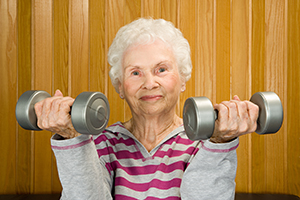
 Liftingweights_Courtesy Jason Zimelman of Safer-America

Helping your loved one remain independent into the latter stages in life can be difficult. For some, it’s nearly impossible to take them out of the home in which they’ve lived so many years. If your loved one has a strong desire to remain at home, there are ways to make it a safer place.


Daily Check-ins

If you or other friends and family live in the surrounding area, it’s vital to keep tabs on your loved ones, daily. Coordinate a schedule to make sure their needs are met. Whatever your loved one’s needs–groceries, medications, or just some company, stop in to see how things are going. If nobody lives within a reasonable range, hire an aid to check in regularly to see how things are going. If nothing tangible is needed, a little company is always nice to have.


Emergency Alert Systems

Today’s advanced technology offers an array of safety monitoring systems. Some tools direct users to an emergency system’s operators with the simple click of a button. Others are able to detect sudden falls, notifying EMS. Be sure to have a completed medical emergency alert card to provide first responders with as much information as possible.


Bathroom Aids

Being able to complete daily functions is essential to remaining independent. Make sure your loved one has the proper tools to help retain independence–such as a raised toilet seat with handrail and a bench, handrails, and non-slip mats in the shower or tub for safer bathing.


Everyday Tasks

Some tasks grow more difficult with age. Fortunately, assistive tools can help. All of these products may be found in Amazon’s Health & Personal Care section.
Dressing stick: This stick can make dressing easier for those with limited mobility–such as helping pulls socks up or lifting a garment around one’s shoulder.
Prescription management: There are various systems available to help one remember to take medications during the day–such as electronic reminders, simple labels on daily medicine containers, or individual packets of medicines.
Extra-long sponge: This is a sponge attached to a longer arm to help with those hard-t0-reach areas while bathing.
Food bumper: This is a guard placed on the edge of a plate to prevent food from falling off.
Long shoehorn: An elongated shoehorn reduces the need to bend while putting on shoes.


Mobility Devices

The simple act of getting around can make or break one’s ability to be independent. With age, walking can prove difficult. Fortunately, there are a number of ways to help with this process.
Accessibility: If wheeled access is needed in the home, make sure that your loved one has a ramp to gain access to the home easily.
Wheelchair: Both manual and electric wheelchairs boost a person’s independence in being able to get around, in, and out of one’s home, which contributes to a happier day-to-day existence.
Walker/Cane: If a wheelchair isn’t necessary, a walking aid can help. As with wheelchairs, getting out and enjoying the day whenever possible is a tremendous benefit to your loved one’s quality of life.

These are five some of the tools caregivers can use to help their loved ones live safely independently.

Jason-Zimmelman_Safer-America

Jason Zimelman is a Public Relations Coordinator with Safer America. The organization provides consumer safety information to help make our community a safer place to live for our children, family and friends

Dementia Signage for the Home


Weekly Planner (Bright Pink) Memo Pad

Dementia Signage for the Home

Behavior Triggers Log (Sky Blue) Memo Note PadBathroom Door Sign-Temporary/Reusable Wall Skins


Checklist for Brushing Teeth Wall DecalDaily Pain Journal (Sky Blue) Memo Notepad


EZ-C Bright Green 3 Ring Binder binders


Sunday, July 6, 2014

How To Care For Two Parents With Dementia

My mom and dad both have dementia. I am all alone taking care of them since my sister passed away I have no one to help me. I get sad and frustrated with them both. How do I deal with my feelings?
These are powerful words. It's a "cry from the wild" which will touch the heart of most caregivers. Many of us feel alone when we are trying to care for our aging parents and there are no siblings to help, or if siblings won't help with caregiving. When we have one parent who has dementia, it is hard. When we have two, it is often nearly unbearable.

My dad had dementia from surgery. There are many kinds of dementia. Mom developed a more subtle type of dementia, the type they used to call "senile dementia." Now it's called "organic brain disease." Whatever the type – Alzheimer's disease, vascular dementia, Pick's disease, dementia due to Parkinson's or just plain "organic brain disease," which sort of applies to them all - it's painful for the caregiver. Sometimes the pain is so raw and isolating that the caregivers become more ill than those they are caring for.

Statistics vary, but upward of thirty percent of caregivers die before those they are caring for. Some of those are adult children, lonely and depressed, isolated and frustrated, often torn by guilt. These caregivers can develop cancer, commit suicide, or have heart problems and other ill health that can likely be traced to the stress of caring for their loved ones.

For awhile, my mom's dementia was just some minor memory loss and she was able to be a fairly active part of my dad's care team after his brain surgery left him demented. However, her dementia worsened and I was soon coping with both of my parents' demented behavior.

One scenario: Their wedding anniversary was the day after Christmas. I would always bring to the nursing home tiny bottles of champagne and their 25th Anniversary champagne glasses. I'd also bring other treats and we'd have a party. Oh, yeah. I'd also bring cards for them to give to each other.

I would sign Dad's card to Mom, as he couldn't and didn't really know what it was. Mom would sign her card to him, but soon after would generally forget what it was for. I would then pile the things into Mom's walker bag and take her down the nursing home hallway to Dad's room (they each had a private room on the same floor).

Generally, I'd have to drag Dad out of foggy sleep, sit him up and - big smile on my face - give them each their cards for the other, explain what they were for, read them with gusto, pour champagne, explain again what they were doing, let Dad fall back to sleep in his chair, then bring Mom back to her room. Like a puppeteer, I'd arranged bodies, moved limbs, orchestrate a production. I'd go home exhausted.

Why did I do this, you ask? Because I didn't want to have to lie a week later when Mom become aware that their anniversary had passed, because she happened to be looking at her new calendar I brought for her wall.

I knew I'd hear, "We missed our anniversary! Why didn't you….?" I'd hear this whether we "celebrated," or not. So I did it. It felt like a sham, but I did it. How did I cope? After I got home, I cried. I cried for them. I cried for me. Pain, frustration, anger, exhaustion, pity – for them and my self, sorry to say, it was all there. The seeming futility of the production was more draining than the actual activity.

So, my friend, you ask how do you cope with your frustration? You are a better person than I if you don't have times when you wonder why you do a lot of the things you do. Much of your frustration is grief, and even anger. Yes, anger. It's okay to say that. Your sister died and she left you with two demented parents. You are all alone. Logic tells you your sister didn't do this "to you" on purpose. But this isn't about logic. It's about your feelings and your feelings are human, painful and justified.

How do you cope with caregiving? Get support from people like those on this site. Get support from caregivers who feel what you are feeling and won't judge you for it. Get professional help, both with the care of your parents, by calling your Alzheimer's Association, and going online to your state's Web site. On the site, under "aging services" or some such phrasing, you will find "The Family Caregivers Support Program." They may have another name for it in your state, but they will have a form of the program because it's federally funded. They will help you find support. Lastly, please see a doctor for yourself. Emotional support from a professional may be needed. Medication may be needed.

You don't want to be a statistic. You need a life. Know that you aren't alone and seek out these resources. And please keep coming back to talk with us. Sometimes everything we do for those who can't remember what we did can seem worthless. But it's not. Other caregivers understand this. In the end, you be glad you did your best, whatever that is. And that's all you can do.

Dementia Signage for the Home

Tuesday, July 1, 2014

Top Summer Tips for Retirees

Summer is a wonderful time to be outdoors and to be active. It is the vacation season for millions. But summer can be a very dangerous time as well. And, like it or not, once we reach the age of 65 or we develop heart disease or high blood pressure, we are at greater risk of suffering a heat-related illness during the summer. Here, then, are my top summer health and safety tips for retirees.

1. Know the symptoms of heat-related illnesses. The greatest risk, of course if heat stroke. But other problems can also occur due to summer heat. Thirst and less frequent urination are signs of dehydration. Prickly heat bumps are a really irritating skin rash. Some people experience cramps and swelling of the hands and feet. It is also possible to experience heat exhaustion (clammy skin, paleness, dizziness, nausea, fever, and headache). Heat stroke symptoms include: sluggishness, rapid heart rate and breathing, confusion and irritability, high body temperature, intense muscle aches, fever, diarrhea or nausea and even fainting and convulsions. Heat stroke is a life-threatening situation. People suffering heat stroke need to get to a hospital immediately.
 
2. Drink lots of water throughout the day. Water cools and prevents dehydration. Be sure to drink lots of water throughout the day, not just with meals. Sports drinks are also helpful. But avoid drinks with a lot of caffeine, lots of sugar, or alcohol because they can cause you to lose more body fluids.
 
3. Be smart about physical exertion. It is best to limit exercise to moderate activity. Plan to engage in any activities that require great physical exertion either early in the day (before it gets really hot) or late at night (after the sun goes down and it cools off). You will find that you have more energy at these times and that you place yourself at less risk for heat-related problems.
 
4. Protect your skin. Protecting your skin with either a hat, clothing or sun screen will not only prevent an uncomfortable sun burn, but it will protect your skin against the damaging UV rays of the sun and protect you from potential skin cancer. Sun Protection Factor (SPF) 30+ or higher is the best choice. If you plan to be in the water, it is important to use a water resistant sunscreen. You can also protect your face, neck and ears by wearing a hat with a wide brim.
 
5. Think about your clothing. Most of us dress for the occasion or the purpose. But as we grow older and our skin becomes more sensitive and our bodies are more likely to feel the effects of heat, we also need to think about what we wear a bid differently in summer. Of course, we want to wear cool clothing. Lightweight clothing is best, but with a tight weave, if possible to keep off the sun. Remember that natural fabrics breathe better than synthetics. And don't forget that black clothing tends to absorb heat while white clothing tends to reflect it.
 
6. Know how heat and sun interact with your medications. Some medicines make us more sensitive to the sun (increased photosensitivity), more sensitive to heat, or more likely to become dehydrated. A quick conversation with your physician or pharmacist will alert you to problems that could arise due to your medications.
 
7. Pay attention to Air Quality Warnings. Breathing difficulties are more common as we grow older. Smog, pollutants, allergens and humidity can make it difficult to breathe. Check your television weather information or check online to see what the air quality is before engaging in strenuous activities or before deciding to spend time outdoors.
 
8. Don't forget to protect your eyes. The UV rays of the sun can also damage your eyes, and will be uncomfortable, especially if you are developing cataracts. Always protect your eyes when outdoors by wearing tinted lenses, a hat with a wide brim, or sunglasses.
 
9. Stay as cool as you can. Staying indoors in an air conditioned place is the best way to protect yourself from the summer heat. Electric fans might be helpful, up to a point, but once the temperature passes the 90 degree mark, they really don't do enough. If you don't have air conditioning, you might want to visit a friend or family member, go to a public place, like a library, shopping mall, etc. or a "cooling center" to spend time in cooler air. Even a few hours in a cool environment can help you prevent heat-related illness. The best time to go to a cooling center is always during the hottest part of the day.
 
10. Rest. Try to space out your activities so you have time to rest between them. If you begin to feel the effects of summer heat, stop what you are doing and rest for a bit before continuing. The less active we are the less our bodies are stressed by heat.
 
In addition, be safe by paying attention to normal safety tips. When traveling, pull over to eat snacks. This year, we should all be particularly careful where we swim and especially where we dive since many lakes and ponds have been affected by this year's droughts and have significantly lower water levels. And, be very careful with fire of any kind.

Dementia Signage for the Home

Bookworm Notepad

Sunday, June 29, 2014

How To Help Your Caregiver Cook Healthier Meals

When someone's cooking for you, it's easy to get trapped by politeness and gratitude. You're thankful to have their help, and you're afraid to rock the boat by making suggestions that might be taken as criticism. That's natural, but it's not going to pay off in the long run. After all, it's you -- or your loved one -- who's eating the food. And you're paying a caregiver to cook these meals for you. (As well as paying for the ingredients, of course.) So how do you take control of the situation so that the meals you're served are ones you actually want to eat? Try these six tactics.

1. Compliment the meals you like.
Remember the old saying, "You catch more flies with honey than with vinegar"? And remember the number-one rule of so-called positive parenting, "Catch them being good"? It's much easier to explain to your caregiver what you want her to do if you set the stage by praising the healthy cooking choices she already makes. Note when she cooks chicken or fish rather than red meat, and tell her how much you like them. Compliment specific cooking styles as well -- if she grills the meat one night, you might say "Grilled meat is my favorite -- it brings out the flavors."

2. Buy healthy ingredients.
If there's fresh salmon in the refrigerator, you're halfway to a healthy meal before you start. Same goes for fresh vegetables, which can be quickly steamed to balance out the unhealthiest main dish. Stock the cupboards with whole wheat pasta, brown rice, and other whole-grain staples, and toss out the unhealthier varieties so there's no confusion.

3. Keep it simple.
While we'd all love to have a professional private chef, that level of expertise is a lot to expect from a caregiver who has a million other duties in addition to meal preparation. Streamline and de-stress the cooking process and you're likely to get much better -- and healthier -- results. Chicken breasts, pork chops, and fish are delicious seasoned and cooked very simply. Vegetables taste great sautéed in olive oil and garlic. Pasta doesn't need fancy sauces; a simple marinara or combination of olive oil and parmesan is all it takes. Make a sample menu for your caregiver that features simple examples from each food group. Emphasize whole grains, lean meats, and plenty of fruits and vegetables.

4. Show rather than tell.
Your caregiver comes to you with her own cooking habits and traditions, and she may be reluctant to take the risk of trying something new that might result in a disaster. Build her confidence by offering hands-on guidance at least once, if possible. Show her how to put together your favorite salad and whip up a simple dressing. Pick a couple of simple recipes and walk her through them. If there's a mistake she commonly makes, such as overcooking vegetables, make a pot together and introduce her to your preferred methods. If you're a long-distance caregiver and can't do an in-person cooking session, send her a few simple recipes with tips on how you prepare them.

5. Make small changes gradually.
If your caregiver is cooking for a loved one who's a picky eater or set in her ways, try to steer the meals in a healthier direction without making drastic changes. For example, if fried chicken is your loved one's favorite meal, with French fries a close second, it's not going to work to banish fried foods altogether. Instead, talk to the caregiver about substituting other cooking methods when possible, but letting a few key dishes stay in the menu. Keep the fried chicken once a week, but switch to stewed okra and baked fish for other meals. (And switch to a healthier cooking oil like canola oil, if you haven't already.) If your loved one hates salad, there's no point in insisting. Instead, teach your caregiver to slip greens and other vegetables into meals like soups and stews, where they won't be as noticeable, and serve meat dishes accompanied by tasty vegetable sides.

6. Cook in bulk.
It takes a long time to make a good, healthy vegetarian lasagna or a hearty chicken stew. But if you make a lot of it, you can have one meal a week ready to go for the next two months. Let your caregiver know that every meal does not have to be freshly cooked and that it's more practical to prepare some dishes, especially soups, stews, casseroles, and some egg dishes and pasta sauces, in larger quantities. Ask her to double recipes when possible, and package the unused portions in single-serving packets. On nights when she's serving a precooked main dish, she'll have more time to prepare a salad, side dish, or dessert.

Dementia Signage for the Home